The short version
- Selling privately usually brings in more than a trade-in, in exchange for a few hours of your time.
- Gather the title, service records and a vehicle history report before you list.
- Price from real comparable listings, then leave a little room to negotiate.
- Put every photo and detail on one page, and share that one link everywhere.
- Meet in public, verify payment before the keys change hands, and file your release of liability the same day.
On this page
- 1. Gather your paperwork first
- 2. Price it from real comparables
- 3. Get the car ready to show
- 4. Take photos that sell
- 5. Build one listing page and share it everywhere
- 6. Screen buyers and show the car safely
- 7. Negotiate and get paid securely
- 8. Complete the paperwork and hand over the keys
- 9. Mark it sold
Selling your car yourself takes a little more effort than trading it in, but the payoff is real. Dealers need room to recondition and resell, so a trade-in offer is usually well below what a private buyer will pay. With a clear plan, a private sale is safe, straightforward and usually done within a few weeks.
This guide walks through the whole process, from gathering paperwork to handing over the keys.
1. Gather your paperwork first
Buyers trust sellers who are organized, and having everything ready keeps the sale from stalling at the last minute.
- The title. Make sure it is in your name and find out whether it has a lien. If you still owe money, contact your lender about how payoff and title release work before you list.
- Service records. Oil changes, tires, brakes and major repairs. A simple folder of receipts can add real value.
- A vehicle history report. Buyers will often ask for one. Having it ready answers questions about accidents and ownership up front.
- Your state's forms. Look up your motor vehicle agency's bill of sale, odometer disclosure and release of liability forms, plus any emissions or safety inspection rules.
2. Price it from real comparables
Pricing is the single biggest factor in how fast a car sells. Start with a few online pricing guides for a private-party value, then look at similar vehicles listed near you: same year range, similar mileage, same trim and drivetrain.
| If your car has… | Price it… |
|---|---|
| Low miles, records, clean history | At the top of the comparable range |
| Average miles and condition | In the middle, with some room to negotiate |
| Known issues or high miles | Below the range, and say why in the listing |
3. Get the car ready to show
You don't need a full detail, but a clean car photographs better and signals that it was cared for.
- Clean inside and out. Wash, vacuum, wipe the dash and clear out personal items. Clean the windows last.
- Fix the small things. Burned-out bulbs, low fluids, a missing cap or a dead key fob battery are cheap fixes that remove easy objections.
- Top off and check tires. Buyers notice tire tread and warning lights. If a warning light is on, find out why and be upfront about it.
4. Take photos that sell
Most buyers decide whether to call based on the photos. Shoot in soft daylight, in an uncluttered spot, with the car filling the frame.
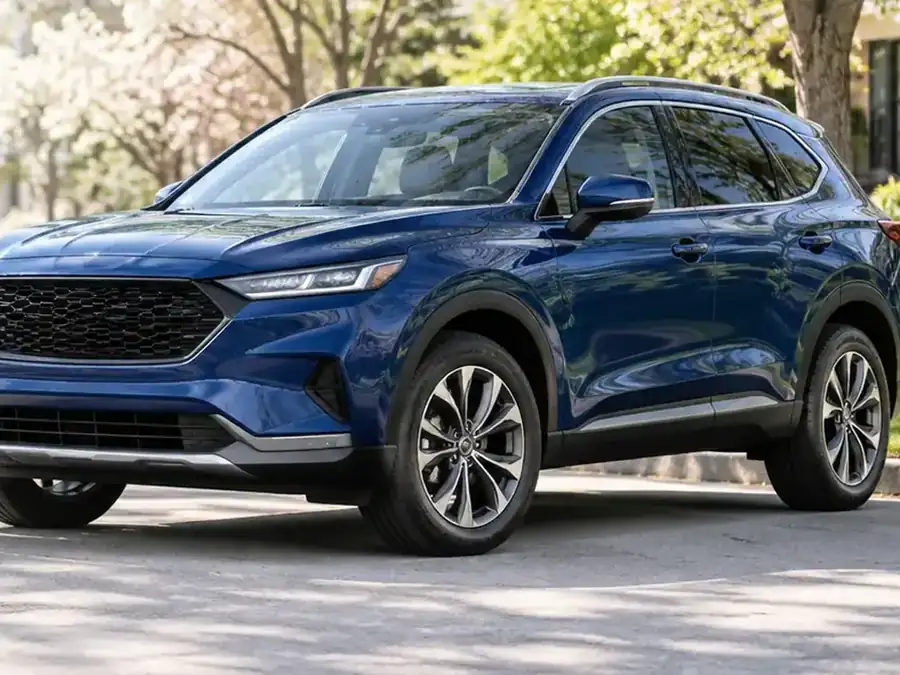
- Front three-quarter, rear three-quarter, both sides, front and back
- Dashboard with the car on, showing the mileage and no warning lights
- Front seats, back seats, cargo area and the engine bay
- Tires, and close-ups of any damage you mention
5. Build one listing page and share it everywhere
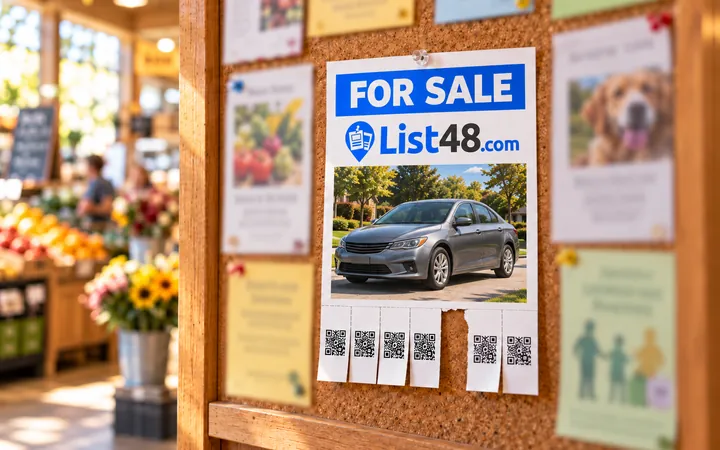
Buyers look in many places: texts from friends, community groups, local buy and sell sites, bulletin boards and cars parked on the street. Most of those places give you very little room. A short post can't hold every photo, the options list and your service history.
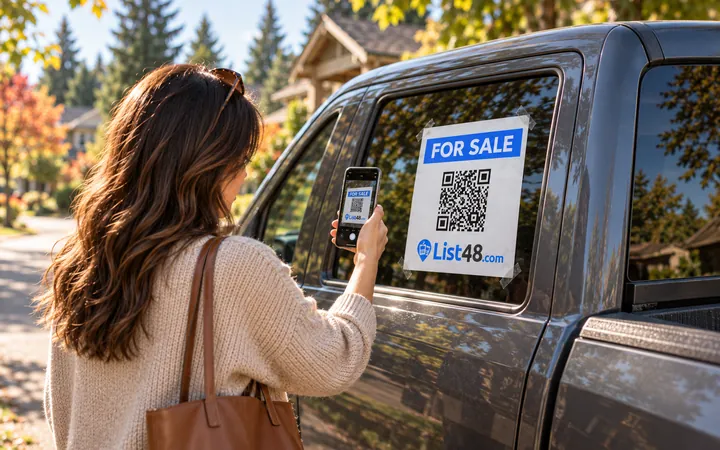
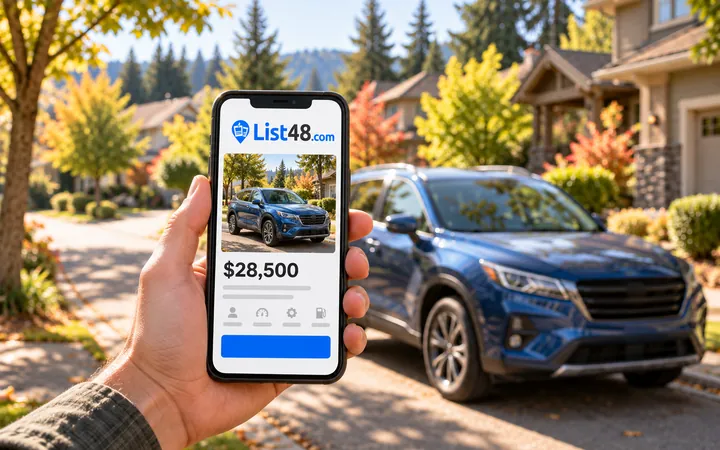
The fix is to put everything on one page and share that single link. Write a short post wherever you like, then add your link for the full details. Tape a sign with a QR code in the window so people walking by can scan it and see everything on their phone.
A good vehicle listing includes:
- Year, make, model, trim, mileage and price in the headline area
- Drivetrain, engine, transmission, title status and number of owners
- Recent maintenance and anything new, like tires, brakes or battery
- Honest notes on any issues, which builds trust and filters out tire-kickers
- How you want to be contacted, and when you're available to show it
6. Screen buyers and show the car safely
Serious buyers ask specific questions about the car. Scammers tend to skip the questions and jump to payment arrangements, shipping or unusual requests.
- Meet in daylight at a busy public place. Many police stations offer a safe exchange spot.
- Bring a friend if you can, and tell someone where you're going.
- Before a test drive, look at the buyer's driver's license, take a photo of it, and ride along.
- If the buyer wants a pre-purchase inspection, that's a good sign. Agree on a nearby shop and go together.
7. Negotiate and get paid securely
Decide your lowest acceptable price before you meet anyone, so you can answer offers calmly. When you agree on a price, get paid before you sign anything.
| Payment | How to make it safe |
|---|---|
| Cash | Meet at your bank so the teller can count and check the bills and deposit them on the spot. |
| Cashier's check | Call the issuing bank using a number you look up yourself, not one printed on the check, and confirm it's valid before handing over the keys. |
| Bank transfer | Wait until the money shows as available in your account, not just "pending." |
Walk away from any buyer who offers more than your asking price, asks you to refund a difference, or wants to send a shipper to pick the car up before paying.
8. Complete the paperwork and hand over the keys
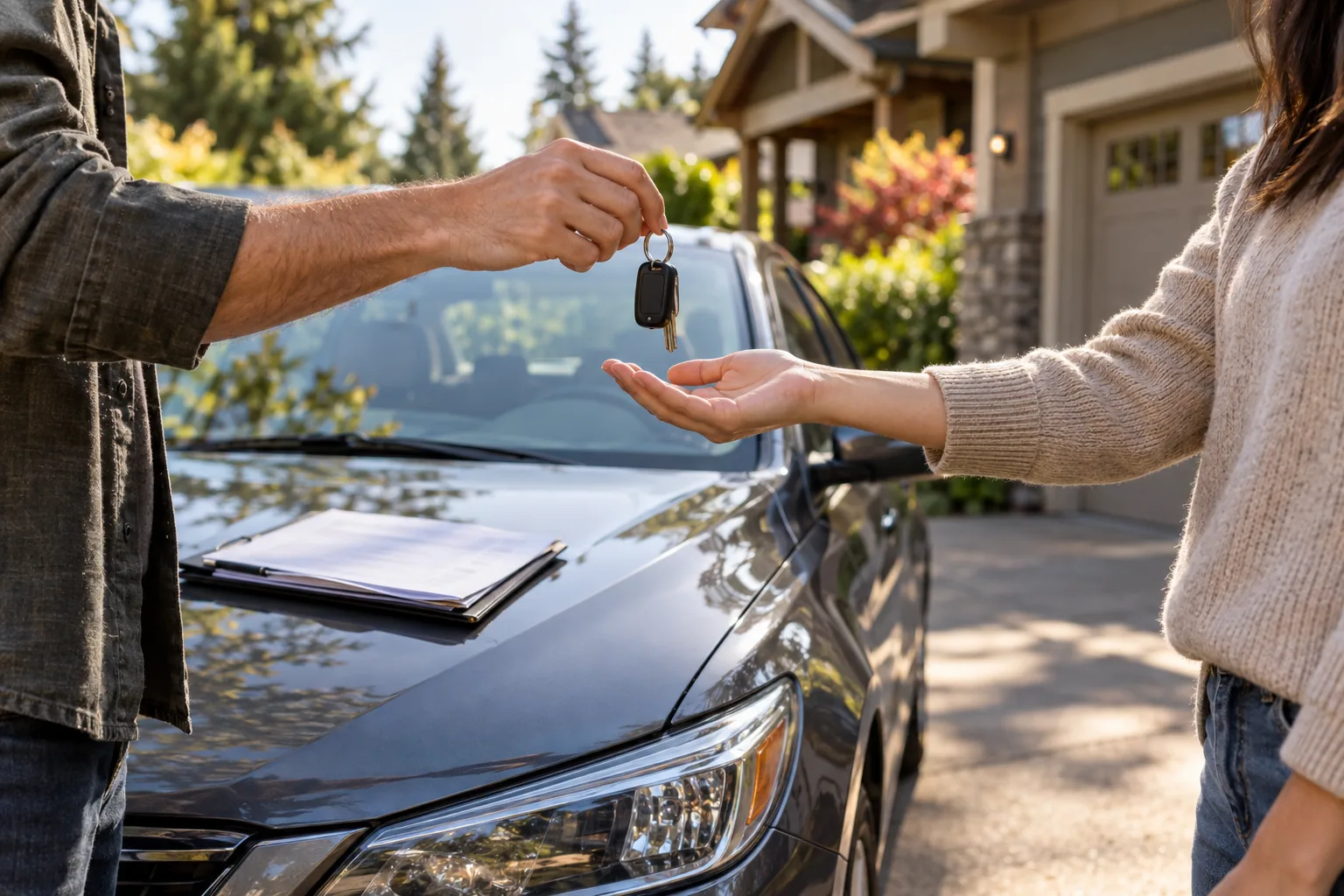
- Sign the title over. Fill in the buyer's name, the sale price, the date and the odometer reading exactly as your state requires. Mistakes on a title can be hard to fix, so go slowly.
- Write a bill of sale. Include both names, the date, the price, the vehicle identification number and the words "sold as-is." Make a copy for each of you.
- File your release of liability. Most states let you do this online the same day. It protects you from tickets or tolls the new owner racks up.
- Handle plates and insurance. Depending on your state, plates stay with you or with the car. Cancel your insurance only after the sale is complete and reported.
9. Mark it sold
Once the sale is done, mark your listing as sold so people stop calling. On List48, a sold listing shows a clear notice for a short time and then archives itself, and any QR code on a sign still opens a page that explains the vehicle has sold.
Selling a car privately comes down to three things: a fair price, a complete listing, and a safe, careful handoff. Do those well and you'll usually come out well ahead of a trade-in.
Common questions
Is it better to sell a car privately or trade it in?
A private sale usually brings in more money because you are selling at retail rather than wholesale. A trade-in is faster and simpler, and in some states it can reduce the sales tax on your next vehicle. If you have a few weeks and are comfortable meeting buyers, selling privately is usually worth it.
What paperwork do I need to sell a car privately?
At minimum you need the title (signed over to the buyer), a bill of sale and, for many vehicles, an odometer disclosure. Most states also ask you to file a notice of transfer or release of liability after the sale. Check your state motor vehicle agency for its exact forms and any inspection or emissions requirements.
What is the safest way to accept payment?
Cash counted and checked at your bank, or a cashier's check you verify by calling the issuing bank at a number you look up yourself. Never accept an overpayment, a personal check for the full amount, or a request to refund a difference.
Should I let a buyer test drive alone?
No. Look at their driver's license, take a photo of it, and ride along. Meet in a busy public place during the day.
How long does it take to sell a car privately?
A fairly priced, clean car with good photos often sells in one to three weeks. Pricing is the biggest factor, followed by photos and how quickly you answer messages.
Create yours free
Ready to sell? Give your car one page with everything on it.
Add your photos, mileage, price and how to reach you. List48 builds the listing page and gives you a short link, a code and a QR code for texts, posts, flyers and a window sign.
- Free
- No account needed
- QR code & flyer included